
Atal Bihari Vajpayee: A Statesman and Poet
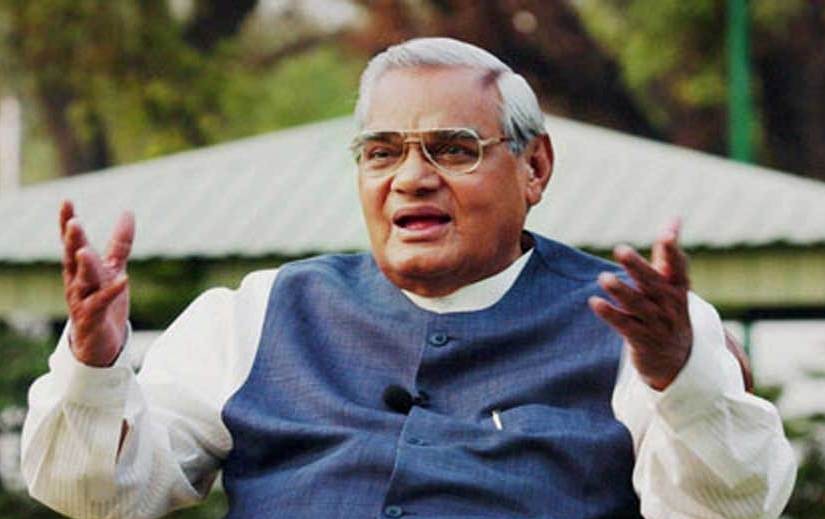
Atal Bihari Vajpayee (1924 – 2018) was an iconic Indian politician who served three terms as the Prime Minister of India, first for a brief 13 days in 1996, then for 13 months from 1998 to 1999, and finally for a full term from 1999 to 2004. A stalwart of the Bharatiya Janata Party (BJP), he was one of its founding members and a revered leader. Beyond politics, he was also a distinguished poet and orator, deeply connected to the cultural ethos of Uttar Pradesh, particularly Lucknow, which he represented in Parliament for multiple terms.
Early Life and Education
Born on December 25, 1924, in Gwalior, Madhya Pradesh, to Krishna Bihari Vajpayee and Krishna Devi, Atal Bihari Vajpayee's roots were deeply embedded in the academic and cultural traditions of his family. He completed his matriculation from Saraswati Shishu Mandir, Gwalior, and pursued his Bachelor's degree in Hindi, English, and Sanskrit from Victoria College (now Laxmi Bai College), Gwalior. He then obtained his Master's degree in Political Science from DAV College, Kanpur. It was during his student days that he developed a keen interest in poetry and public speaking, skills that would later define his illustrious political career.
Political Journey and Rise to Prominence
Vajpayee's political career began during the Quit India Movement in 1942, although he was not actively involved but was arrested along with his elder brother. He became a full-time worker of the Rashtriya Swayamsevak Sangh (RSS) in 1947. He became a close associate of Syama Prasad Mookerjee, the founder of the Bharatiya Jana Sangh (BJS), the precursor to the BJP. After Mookerjee's untimely death, Vajpayee took over the leadership of the BJS. He was first elected to the Lok Sabha in 1957, representing the Balrampur constituency. His exceptional parliamentary skills, eloquence, and remarkable ability to connect with people across all party lines quickly made him a widely respected figure in Indian politics. He was particularly known for his moderate views within the Jana Sangh, which broadened his appeal and made him acceptable to a wider political spectrum.

Prime Ministership and Key Achievements
Vajpayee's tenure as Prime Minister (1996, 1998-2004) is often remembered for several landmark decisions and transformative initiatives that shaped modern India:
- Pokhran-II Nuclear Tests (1998): Despite facing severe international sanctions, India successfully conducted a series of underground nuclear tests, decisively asserting its status as a nuclear power.
- Kargil War (1999): He deftly led India to a decisive victory against Pakistani intruders in the Kargil region, showcasing strong leadership during a critical national security challenge.
- Economic Reforms: His government initiated significant economic reforms, including the strategic disinvestment of Public Sector Undertakings and robust infrastructure development projects.
- Pradhan Mantri Gram Sadak Yojana (PMGSY): A massive and highly successful rural road connectivity program, which significantly improved infrastructure and accessibility across rural India.
- Sarva Shiksha Abhiyan (SSA): A flagship program aimed at universalizing elementary education, ensuring access to schooling for millions of children.
- Lahore Bus Diplomacy (1999): A bold and historic peace initiative with Pakistan, fostering cross-border relations and demonstrating his commitment to regional peace.

Atal Bihari Vajpayee during his impactful tenure as Prime Minister
Poet, Orator, and Statesman
Beyond his exceptional political prowess, Vajpayee was equally celebrated for his significant literary contributions and unparalleled oratorical skills. His poetry, primarily composed in Hindi, often reflected his deep-seated patriotism, profound humanism, and contemplative philosophical outlook. His unique ability to articulate complex political ideas with simple, yet profoundly impactful, words earned him immense respect and admiration across the entire political divide. He was a true master of parliamentary debate, and his speeches are widely remembered for their sharp wit, timeless wisdom, and powerful emotional appeal. He gracefully embodied the quintessential 'Lucknowi Tehzeeb' (refinement and etiquette) in his public conduct and personal life, making him a truly beloved and revered figure in the city of Lucknow and across the nation.

Awards and Recognition
For his immense and lasting contributions to public life and Indian politics, Atal Bihari Vajpayee received several of the nation's most prestigious awards and honors:
- Padma Vibhushan (1992): India's second-highest civilian honor, recognizing his distinguished service of a high order.
- Bharat Ratna (2015): The highest civilian award of India, bestowed upon him by President Pranab Mukherjee, acknowledging his exceptional service to the nation.
- Parliamentarian of the Year (1994): A prestigious award recognizing his outstanding contributions to parliamentary proceedings and exemplary conduct as a legislator.
Legacy of a Visionary Leader
Atal Bihari Vajpayee passed away on August 16, 2018, leaving behind an incredibly rich legacy of inclusive politics, significant economic reforms, and a powerful vision for a strong and prosperous India. He is universally remembered as a remarkable consensus builder, a compassionate leader, and a towering figure who left an indelible mark on the nation's history and its political discourse. His statesmanship and commitment to democratic values continue to inspire generations.
Back to Famous Personalities