
Pt. Birju Maharaj: The Embodiment of Kathak
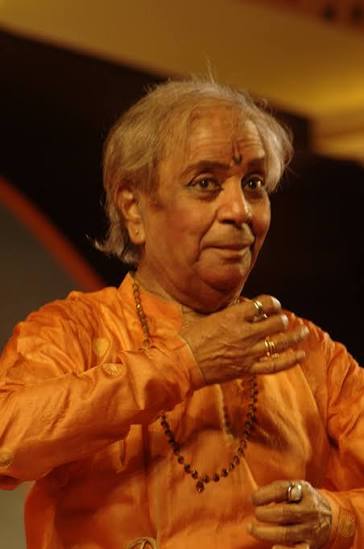
Pandit Birju Maharaj (1938 – 2022), born Brijmohan Nath Mishra, was a legendary Indian Kathak dancer, choreographer, vocalist, and composer. He was the torchbearer of the Kalka-Bindadin Gharana of Lucknow, a lineage that has produced generations of Kathak masters. Revered globally for his exquisite footwork, expressive *abhinaya* (facial expressions), and innovative compositions, Birju Maharaj elevated Kathak to new heights, blending traditional purity with contemporary creativity. His contributions to Indian classical dance are unparalleled, making him a true icon of India's cultural heritage.
Early Life and Kathak Lineage
Born on February 4, 1938, in Handia, a village in what is now Uttar Pradesh, Birju Maharaj was destined for a life in Kathak. He was a descendant of the legendary Maharaj family of Kathak dancers, including his father and guru, Acchan Maharaj, and his uncles, Shambhu Maharaj and Lachhu Maharaj. He began performing at a very young age, absorbing the nuances of the art form from his illustrious family. His initial training under his father laid the foundation for his immaculate technique and profound understanding of rhythm and emotion.
Mastery and Innovation in Kathak
Birju Maharaj's dance was characterized by its impeccable blend of the rhythmic *taal* and expressive *bhava*. He was renowned for his fluid movements, intricate *footwork*, and an ability to convey a wide range of emotions through *abhinaya*. Beyond his performance skills, he was a prolific choreographer and composer, creating numerous new compositions and dance ballets that expanded the traditional repertoire of Kathak. He introduced elements of storytelling and theatricality, making Kathak more accessible and engaging for wider audiences globally. His musical talents, including playing the tabla, naal, and violin, further enriched his dance creations.
Contributions to Cinema and Teaching
Birju Maharaj also left a significant mark on Indian cinema through his choreographic work. He choreographed two classical dance sequences in Satyajit Ray's acclaimed film "Shatranj Ke Khilari" (1977) and later gained widespread recognition for his choreography in Bollywood films like "Devdas" (2002), "Vishwaroopam" (2013), and "Bajirao Mastani" (2015), for which he won prestigious awards.
As a dedicated guru, he taught at prominent institutions like Sangeet Bharati, Bharatiya Kala Kendra, and the Kathak Kendra in Delhi, where he served as head of faculty and director. He trained countless students, ensuring the continuation and evolution of the Kathak tradition.
Pt. Birju Maharaj's influence extended to Indian cinema
Awards and Recognition
For his profound contributions to Kathak and Indian arts, Pt. Birju Maharaj received numerous accolades:
- Sangeet Natak Akademi Award (1964): One of the earliest and most significant recognitions for his artistic excellence.
- Padma Vibhushan (1986): India's second-highest civilian honor, acknowledging his exceptional and distinguished service.
- Kalidas Samman (1986-87): Awarded by the Government of Madhya Pradesh for his contribution to classical arts.
- National Film Award for Best Choreography (2012): For the Tamil film "Vishwaroopam."
- Filmfare Award for Best Choreography (2016): For the song "Mohe Rang Do Laal" from "Bajirao Mastani."
Enduring Legacy
Pt. Birju Maharaj passed away on January 16, 2022, leaving an irreplaceable void in the world of Indian classical dance. His legacy is not just in his breathtaking performances but also in the generations of disciples he trained and the innovations he brought to Kathak. He ensured that the traditional art form remained vibrant and relevant, bridging the gap between classical purity and contemporary appeal. His life was a testament to his dedication to Kathak, making him an eternal inspiration for artists worldwide.
Back to Famous Personalities